Dado – Biographical guide
Established by Amarante Szidon
Click on the images to enlarge them
(large and extra large sizes)
❧
Fullscreen
slideshow
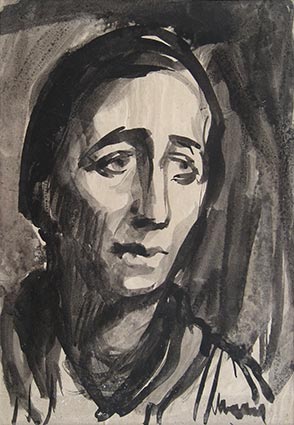
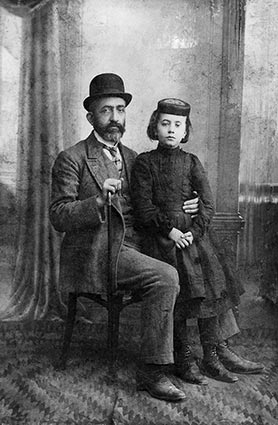
Right: Dr Jovan Kujačić and his daughter Vjera, Dado’s grandfather and mother, circa 1910.
Miodrag Djuric (in Montenegrin: Đurić, pronounced Jooritsh), known as Dado, was born on 4 October 1933 in Cetinje, Montenegro (Kingdom of Yugoslavia), former royal capital looking like a village, surrounded by mountains. The son of a biology professor, Vjera Kujačić, and a nurse manager, Ranko Đurić, he is the third of five siblings, two boys and three girls. The Kujačić family is an old family of doctors and intellectuals originally from Herzegovina, with some military ancestors too. Dado’s maternal uncle, Mirko Kujačić, a painter, lived in France in the 1920s, and attended the academy of André Lhote. The maternal grandfather, Jovan Kujačić, was the first hygienist doctor in Montenegro, as well as the author of translations of classic texts (Homer, Greek doctors) and texts from Russian literature (Tolstoy). On the father’s side, the Đurićs were a family of shoemakers and also counted some famous women embroiderers. Settled in a house overlooking Cetinje’s main square, the family experiences material difficulties.
1941Italian occupation. The family makes friends with an Italian officer who shows Dado reproductions of paintings by Renaissance artists. It is undoubtedly in the same period that Dado, who already shows a strong interest in drawing, makes his first mural in the family home, representing two birds. His mother calls him Dado – a nickname he takes as his artist name, signing his first paintings and drawings Miodrag Dado Đurić – and predicts he will have a great future as a painter: “You will be the Walt Disney of painting”. Dado’s elder brother, Božidar, also paints.
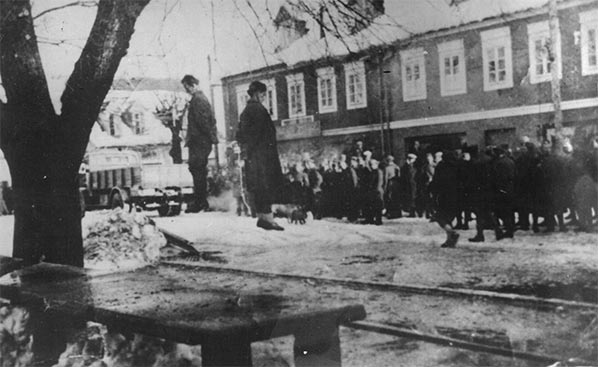
1943Following the collapse of Mussolini’s Italy, Montenegro is occupied by the Nazis. Life conditions gradually become harder.
1944January: two resistant fighters are hung by the Nazis in Cetinje.
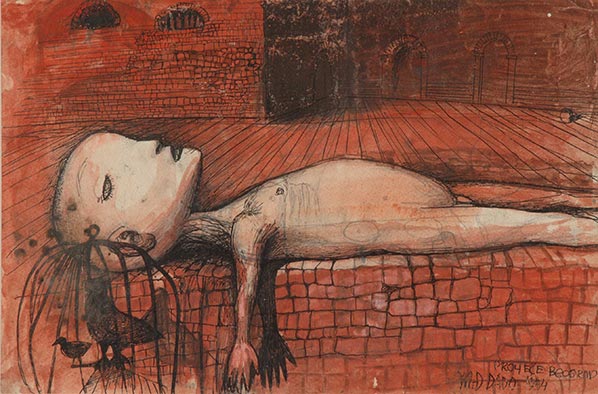
1945Death of Dado’s mother at the age of forty-two, while giving birth. The baby, a little girl, followed her two months later. Julia Bastać, the paternal aunt, looks after the four orphans.
Around 1945-1947Dado leaves for Ljubljana, in Slovenia, a baroque town of the former Austro-Hungarian empire, to stay with his uncle, the artist Mirko Kujačić, whose studio, located in the Tivoli park, he regularly visits. He discovers modern art in an issue of Life magazine – Francis Bacon, Ivan Albright, Ben Shahn – and the film of Albert Lewin, The Portrait of Dorian Gray (1945).
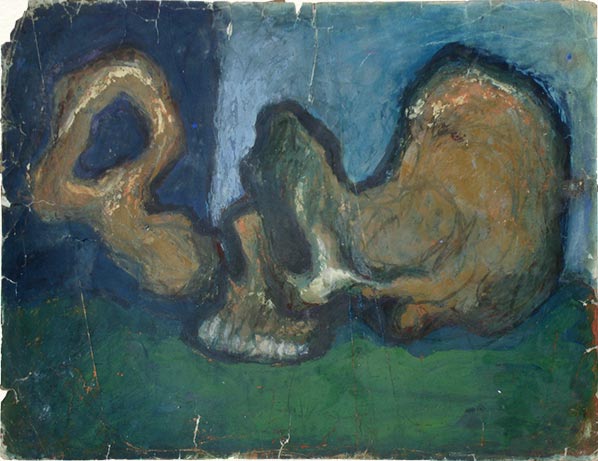
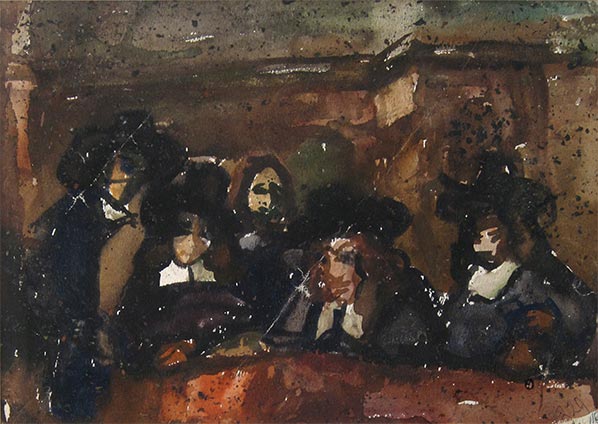
Around 1948-1952Return to Montenegro. From 1950, Dado studies at the Fine Arts school of Herceg-Novi, in the brand new republic of Montenegro, in socialist Yugoslavia; his uncle Mirko Kujačić teaches there. Dado becomes friend with Uros Tošković, an artist making very original works close to art brut. He takes part in the restoration of frescoes in the Morača Monastery.
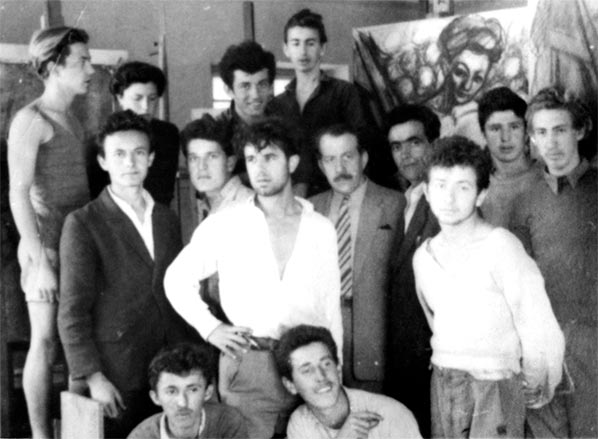
Around 1952-1953Arrives in Belgrade. Boarding at his maternal aunt’s in the centre of the city, Dado sets up a studio in the attic, and continues his training at the Fine Arts Academy, where he studies under Marko Čelebonović, a Serbian artist who had a good career in France and who encourages him in his practice. In several notebooks from the Belgrade period (former collection of Jernej Vilfan), those years and his friendship with future members of the group Mediala, like Leonid Šejka and Tošković, clearly show through. Dado is also very close to his cousin Tupa Vukotić, a student at the Architecture School who provides him with architectural plans on the back of which he draws.
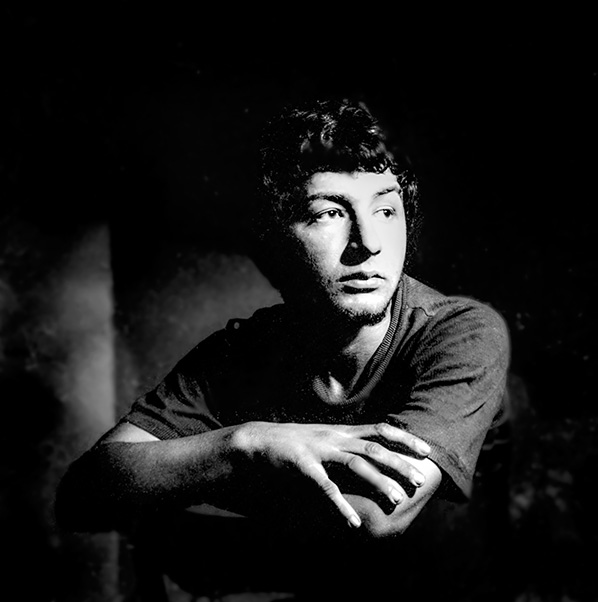
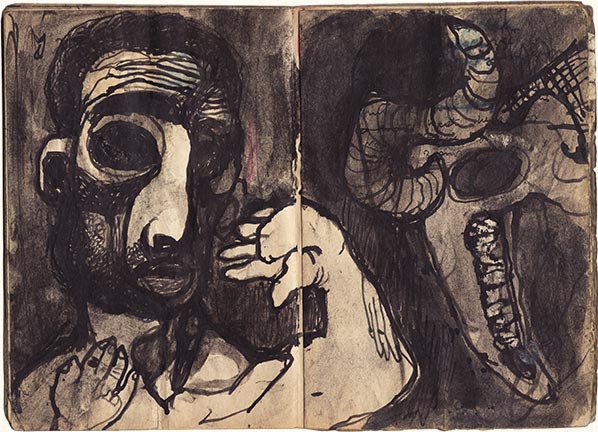
1955During a stay in Belgrade, Henry Moore notices his work, and offers him a bursary to study in London, before changing his mind, the apparatchiks having persuaded him to not carry through with that plan because of Dado’s bad reputation. Put in prison for two to three weeks with other marginals in Belgrade (among them his cousin Tupa) during an official visit of Khrushchev at the end of May. Out of prison, Dado makes The Cyclist on a linen canvas taken from a mattress of the hospital in Cetinje that was provided by his father, who works there.
1956First exhibition at the Salon in Rijeka (Croatia) alongside French artists. First acquisition by the Yugoslav State: The End of the World. Marko Čelebonović helps him leave for Paris, where he arrives on 15 August. Shortly after his arrival, after working on building sites, Dado works and sleeps at the lithograph studio of Gérard Patris, the son-in-law of the composer Pierre Schaeffer, where he meets Jean Dubuffet and Matta.
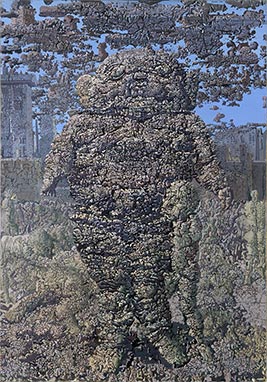
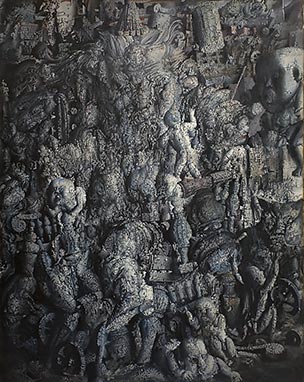
Abbaye d’Auberive collection. Photo: Michel Graniou.
Right: Courcelles-les-Gisors, Oise, 1958, oil on canvas, 161 × 128 cm.
1958-1959James Speyer, who will eventually become curator at the Art Institute of Chicago buys his first painting. Kalinowski and Dubuffet arrange a meeting with Daniel Cordier who becomes his dealer. First solo exhibition at the Galerie Daniel Cordier in autumn 1958. Dado leaves Paris to settle in an abandoned cinema in Courcelles-lès-Gisors, where he can devote himself exclusively to painting and drawing. First “mineral” paintings. He meets Jacques Dauchez, Jean Dewasne, François and Germaine de Liencourt and Bernard Réquichot, another artist at the Galerie Daniel Cordier. He is hospitalised for two months at the Saint-Antoine hospital, suffering from depression. Réquichot comes to see him regularly and brings him sketchbooks for drawing.